
Tension and Transformation
Buon Fresco
Reaching the heights of its mastery during the Italian Renaissance, fresco played a pivotal role in the evolution of Western painting’s narrative, spatial, and emotional expression. Both through an intrinsic relationship with architecture and history of Catholic patronage, greats of the Renaissance used fresco to redefine the very power of art itself, extending walls, ceilings, and entire rooms into vibrant worlds of biblical stories and Greek mythology on a scale and with an intensity of magnetism unseen. Even during this period, buon fresco, or “true fresco,” was known as the most challenging form of painting due to the intensely short working time of the wet plaster, and despite considerable experimentation with dry applications of pigment, other techniques proved far less durable than buon fresco’s chemical process. As oil painting grew more widespread and versatile, fresco largely fell out of favor and, though experiencing a brief revival during the Mexican Muralism movement of the 1920’s, remains a rarity in comparison to its historical significance. It’s with a deep reverence for the roots of this tradition, and gratitude to the familial manner in which its knowledge has passed down to me, that I engage with it in a contemporary practice today.
My approach to painting a buon fresco is a dance of discipline and freedom, a flux of chaos and order. I begin by spreading the intonaco, a thin layer of wet plaster, onto the fresco wall (Figure 1), and just as soon, the clock starts counting down, as the rapidly drying substrate will cease to be receptive to pigment in 6-12 hours. Mistakes are difficult, often impossible, to correct. As such, perceived missteps must alter my course without hesitation. For the duration of the painting, I am, without interruption, chained to navigate this dynamism with the rigid voice of my inner critic. My compositions have developed to embrace this tension, freeing my brush to flow across the intonaco with the impulsive fluidity of an unconscious hand, only after granting my compulsion towards order the ability to seek consistency and depth within this new world (Figure 2). Even so, when finished, I once again relinquish fantasies of control, as the painting is to undergo a violent and sudden transformation.
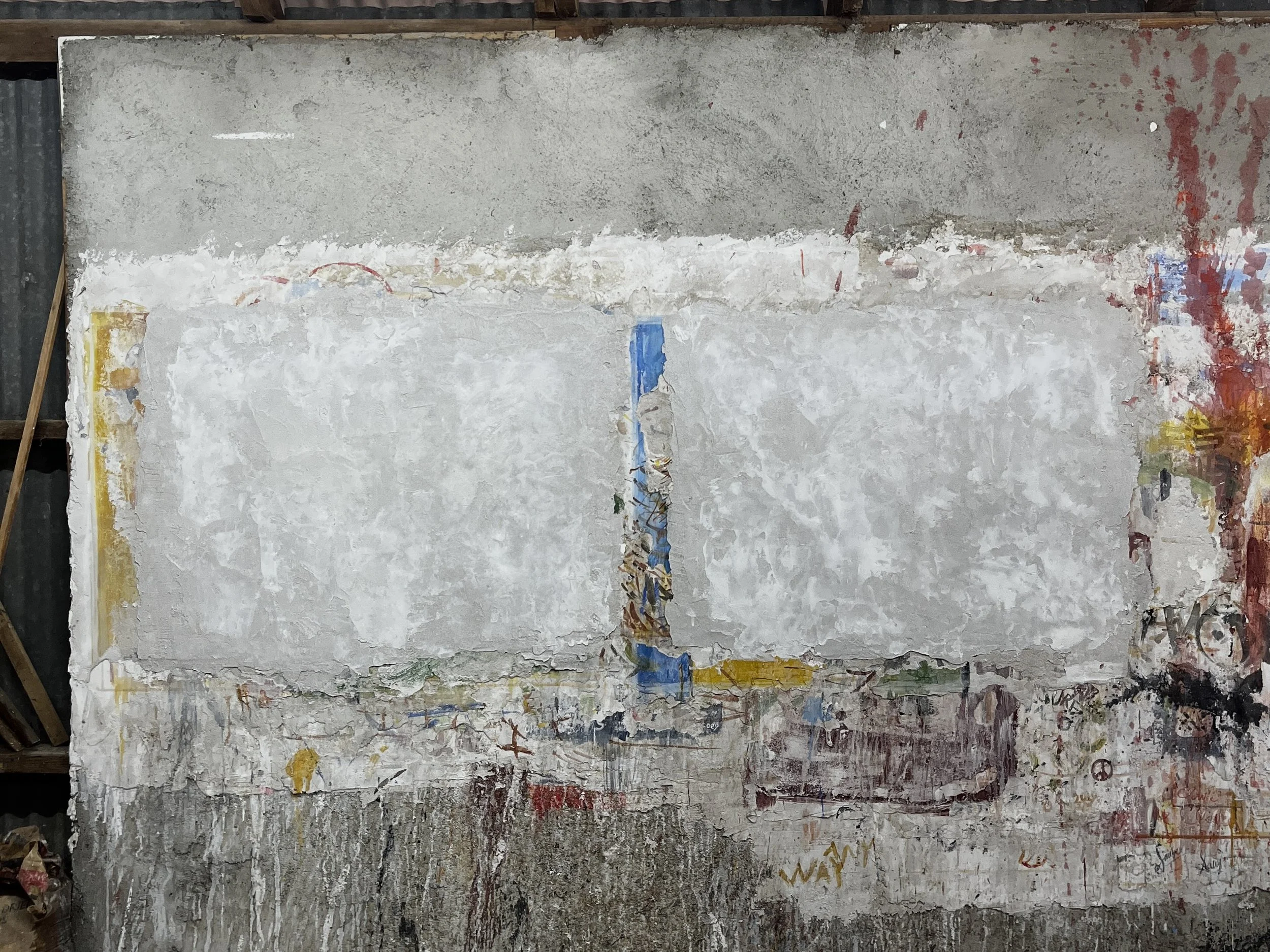
Figure 1: Fresh intonaco
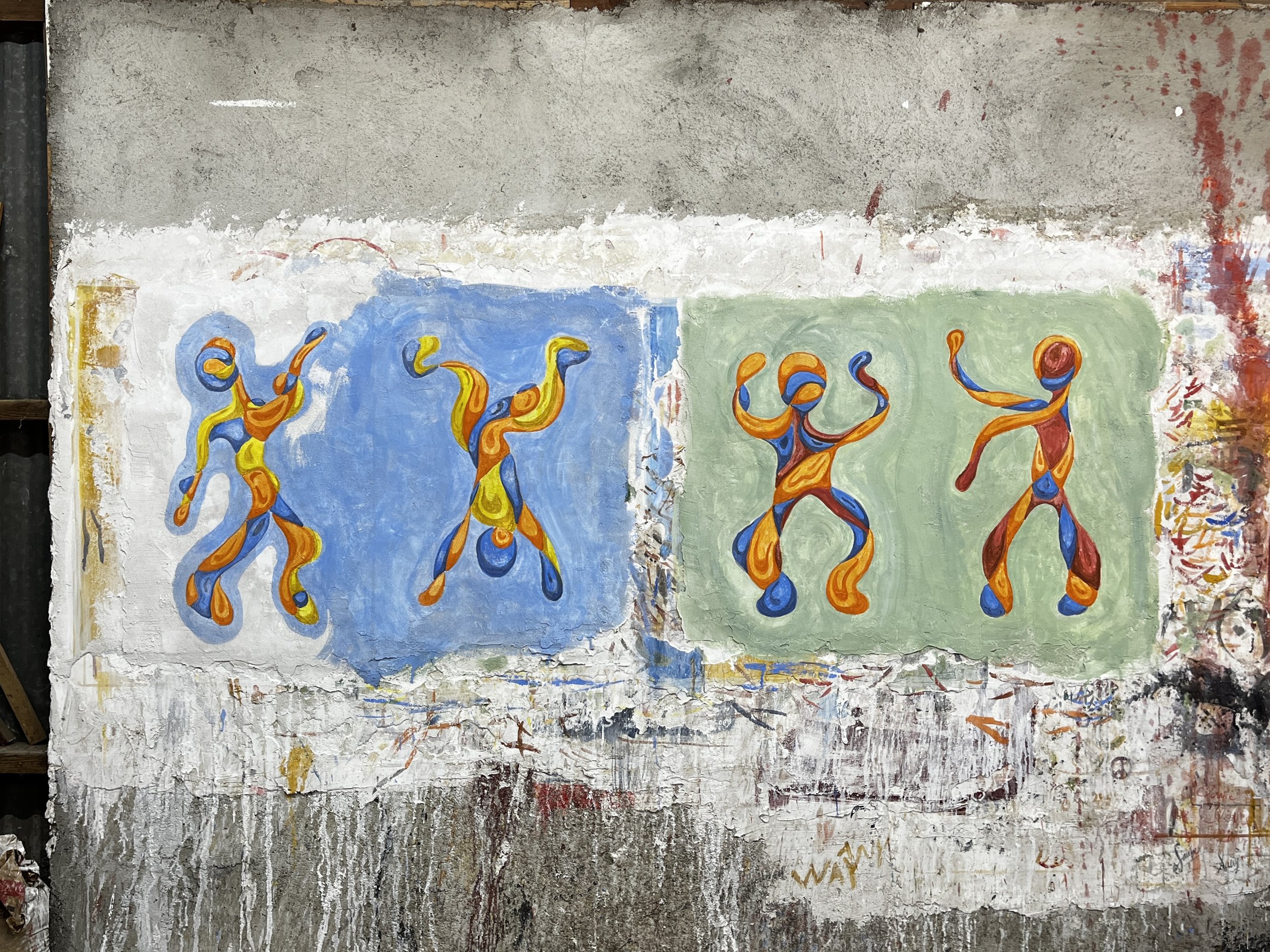
Figure 2: In progress
The Strappo Transfer
The strappo transfer, a historic technique in its own right, has been used by Italian art conservators to remove and save frescoes from decaying structures since its conception in the early 18th century. Unpredictable by nature, its secrets are closely guarded by the restorers who practice it, though it's precisely the indiscriminate nature of its alteration that makes this method so exciting for me to utilize within an original process.
After about a week, I cover the now-dry fresco with a canvas and apply animal skin glue through it, binding the two together, and await the painting’s fateful moment while it sets (Figure 3). When I return, with heart in mouth, I hold the canvas firmly, and in one swift motion, rip it downwards to the sound of the intonaco crumbling and tearing from the wall with it. Entire sections of the painting, details I agonized over, or defining characteristics of my subjects, may be left behind in an instant. Immediately, I hold the canvas to a light, inferring which parts remain, and which have been left behind, though a second transfer must occur before I may see the face of my work again.
I stretch the first canvas and, using a synthetic adhesive, glue a second onto its backside, before allowing it to dry once more. Days later, I hang the canvases and spray boiling water to soften the animal skin glue (Figure 4). Then, corner by corner, I gingerly pull the first canvas back to reveal the fresco’s rebirth (Figure 5). And what feelings it conjures within me to experience its new character! As I begin the process of mounting and framing, I reflect on the transformation of my work as both an expression of self and a detached entity, born within a river never stepped in twice.
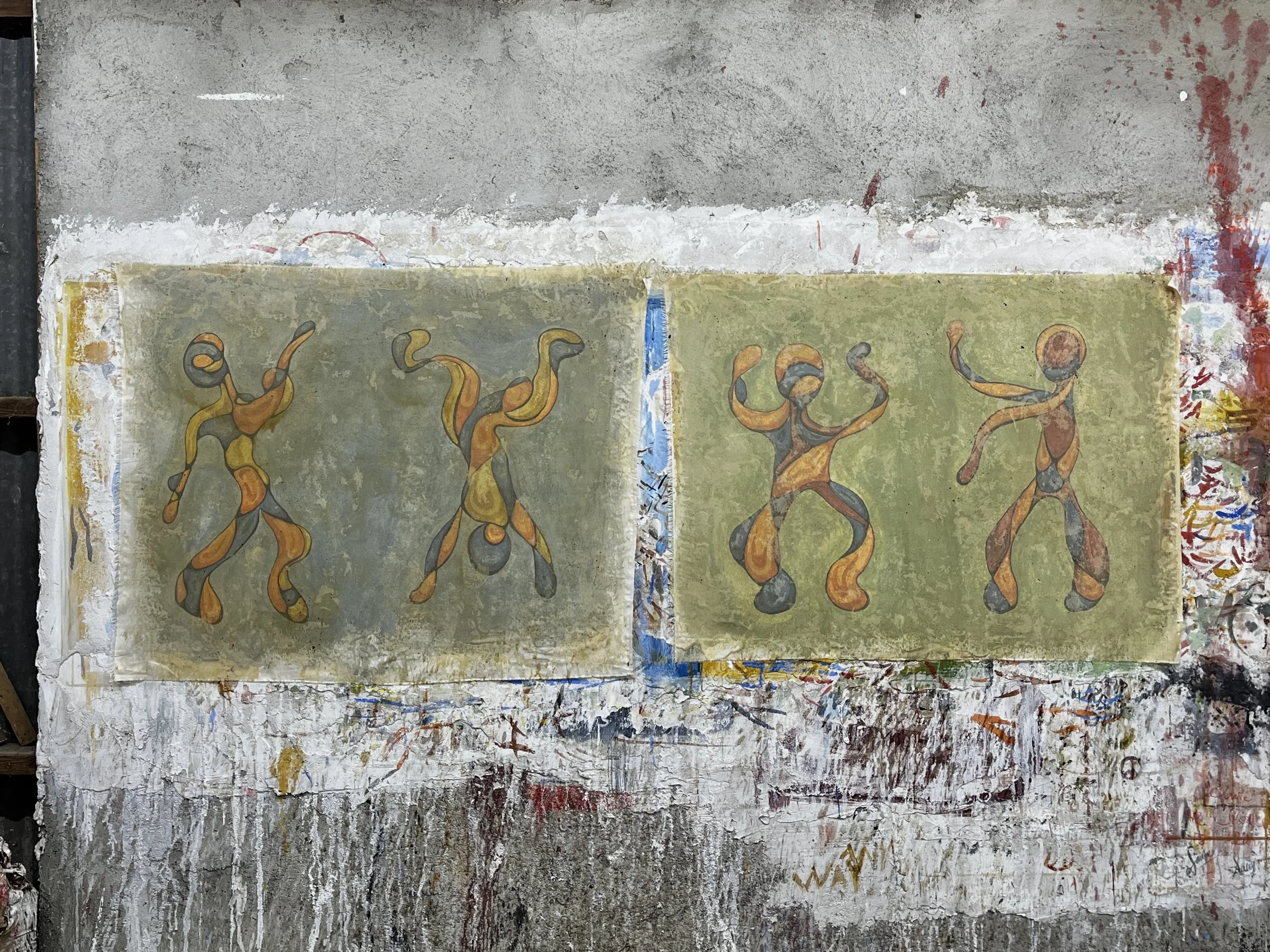
Figure 3: First canvas glued onto wall
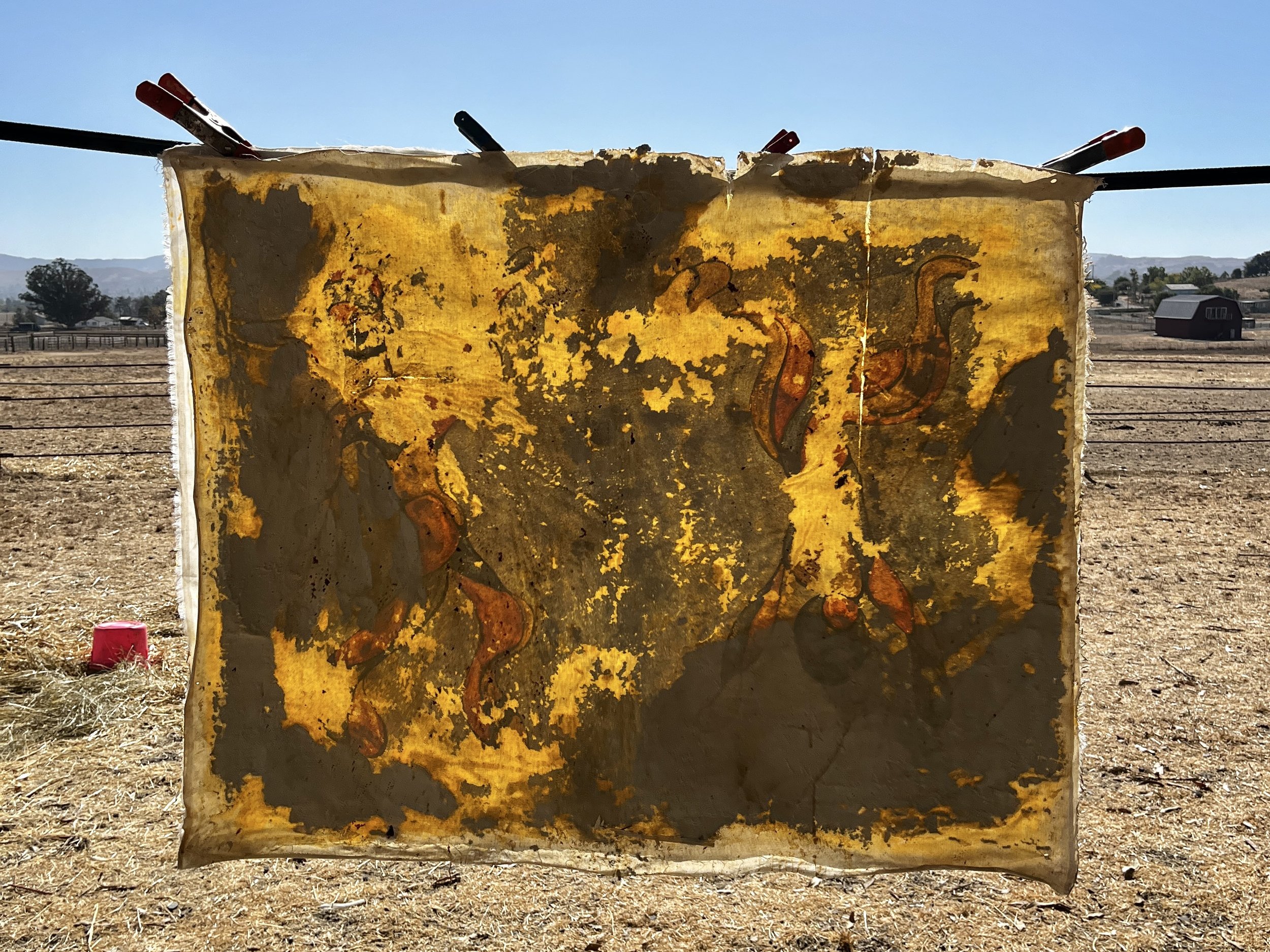
Figure 4: Fresco between canvases
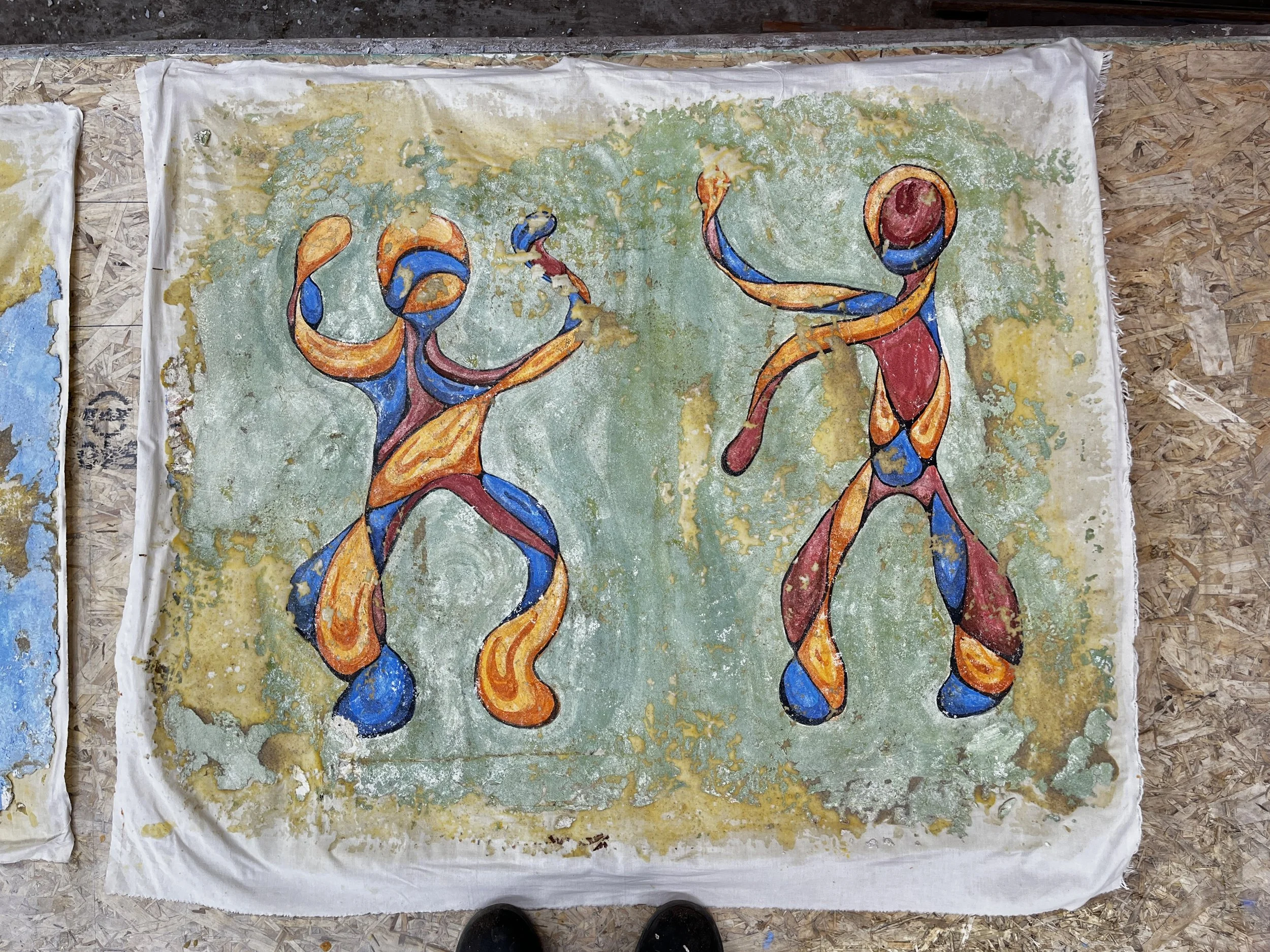
Figure 5: Painting revealed

Lying There I Wondered
Buon Fresco with Strappo Transfer
Diptych, Spring 2025
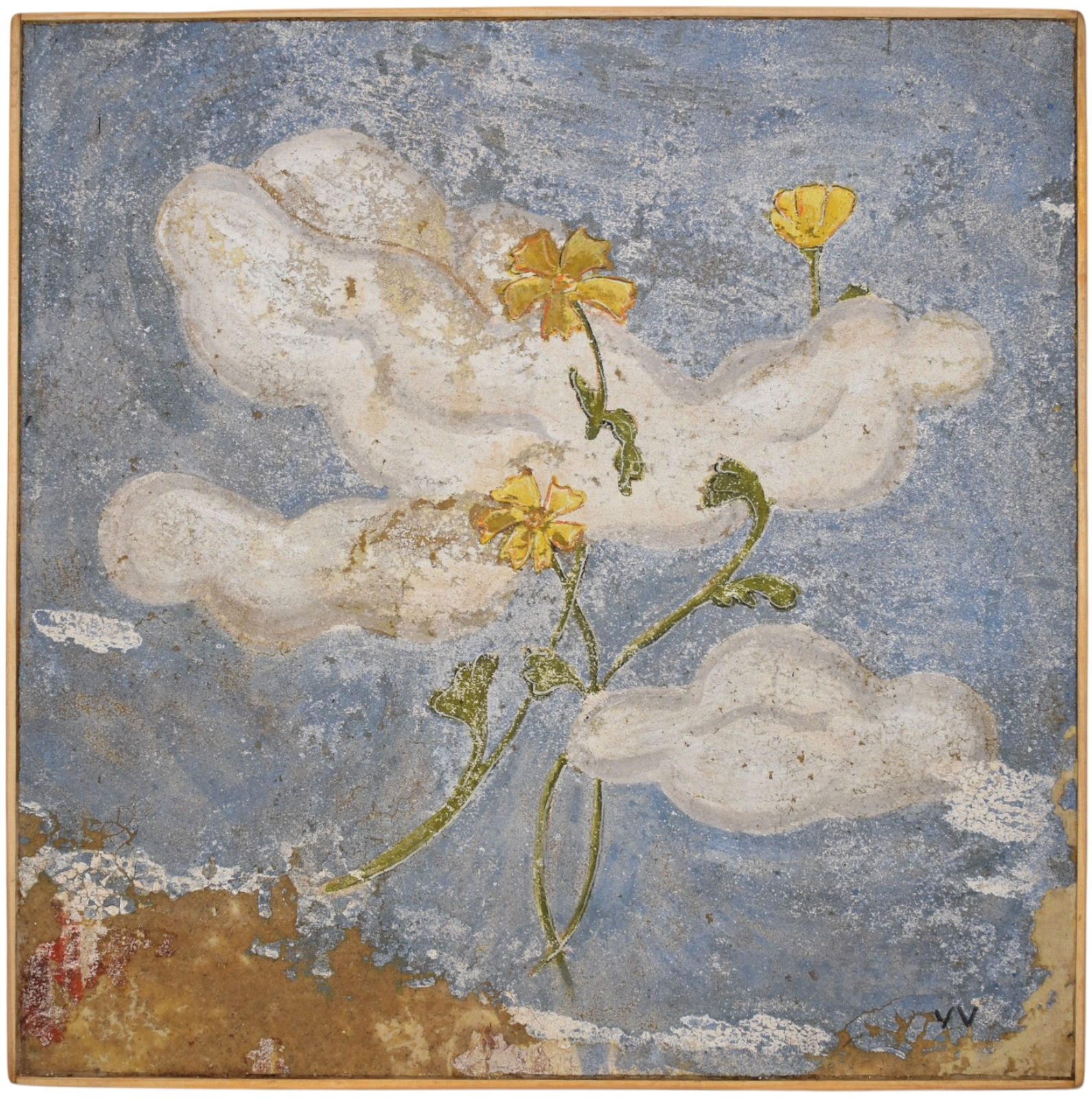
Something to Reach For?
20” x 20”
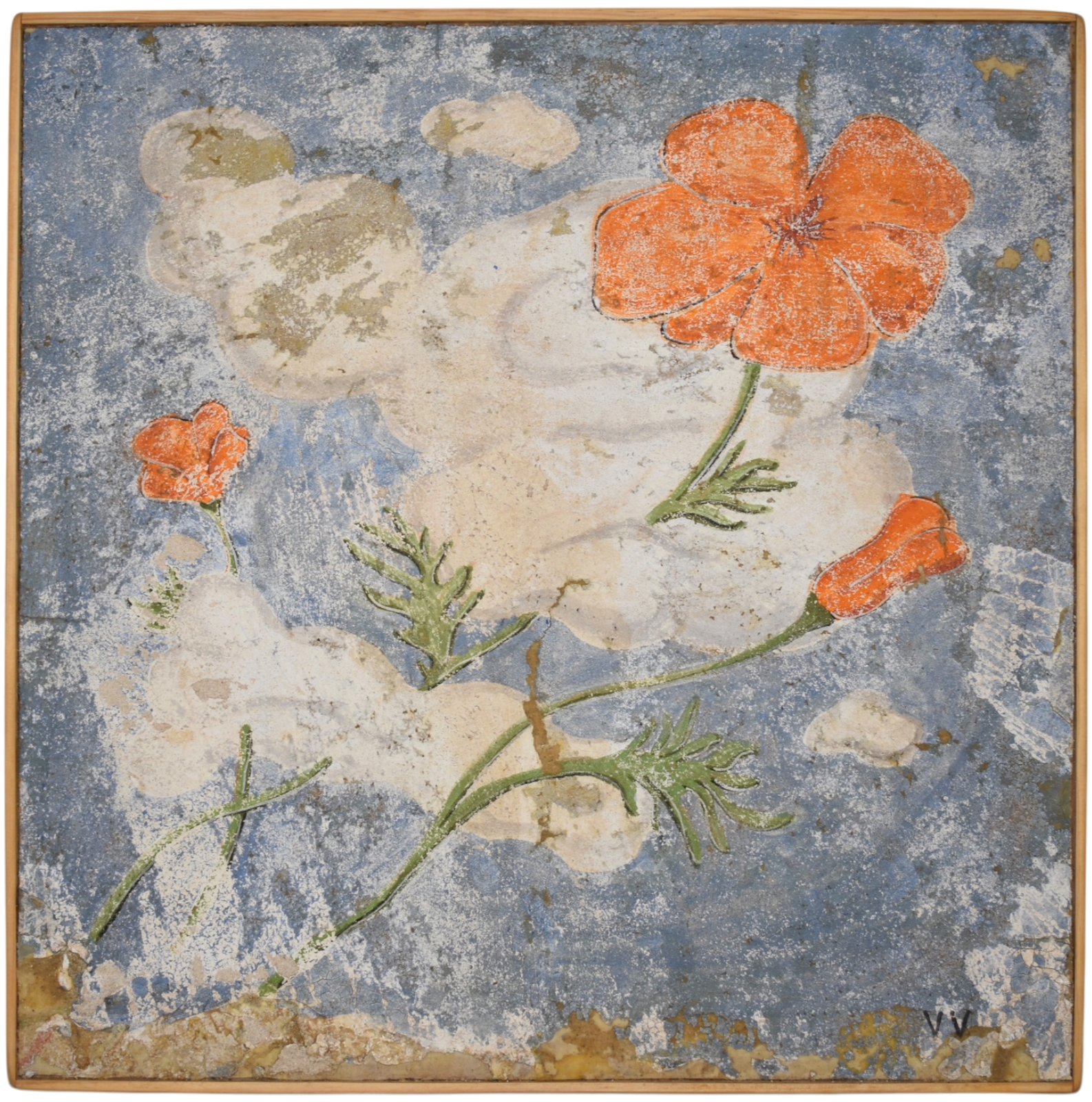
Something to Hold?
20” x 20”
Motions of Self
Buon Fresco with Strappo Transfer
Series, Winter 2025
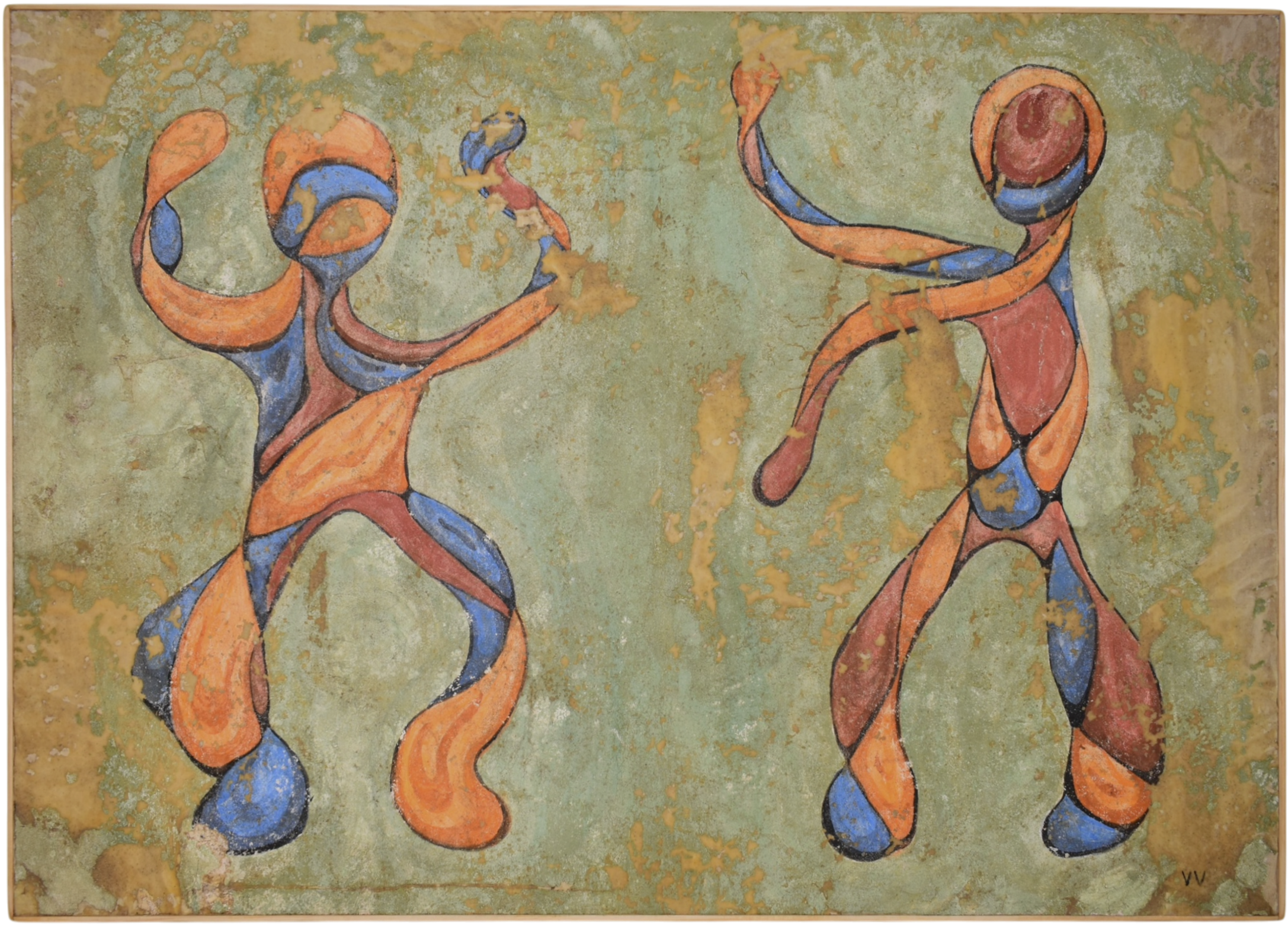
The Night Away
30” x 40”
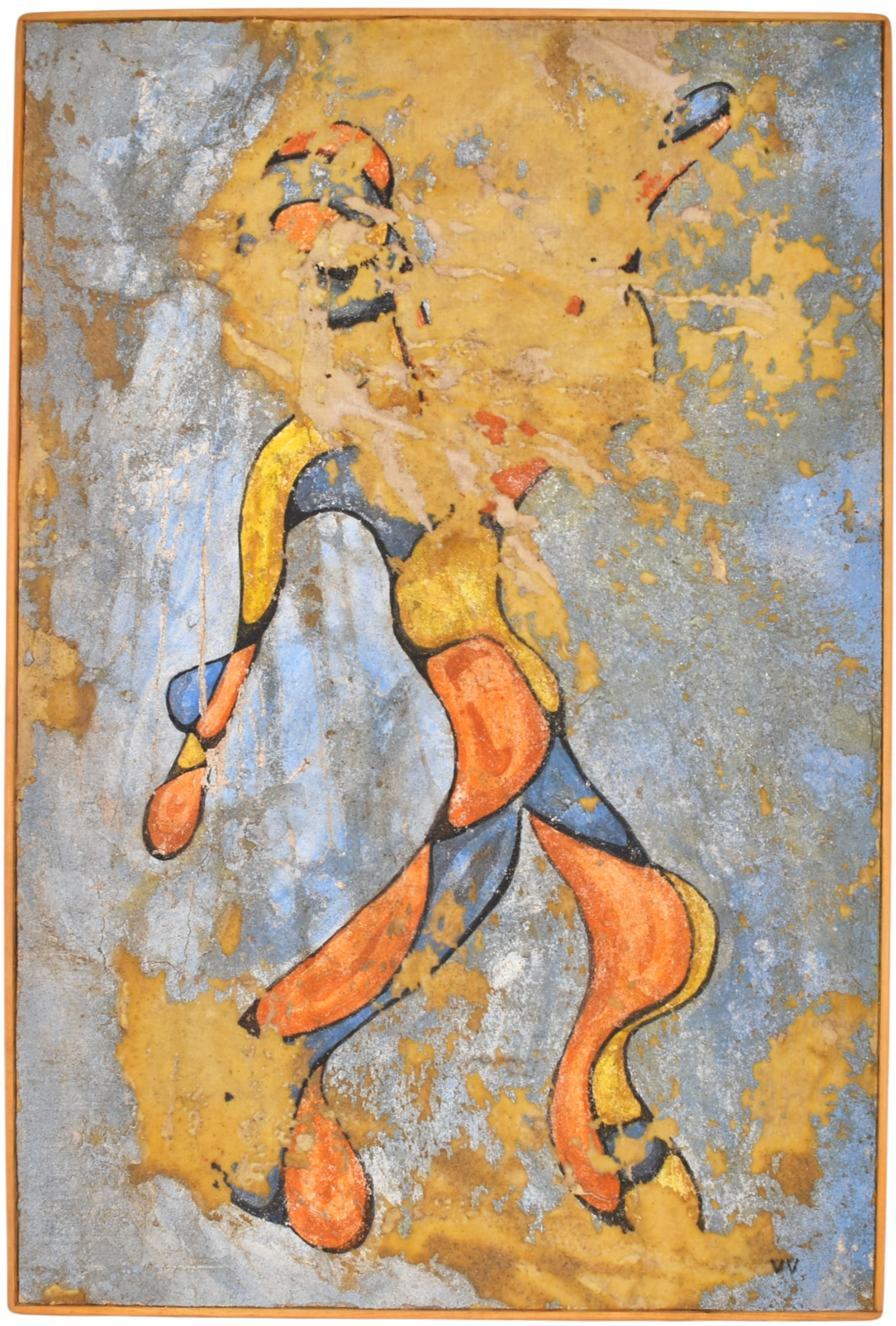
All but Memory
30” x 20”
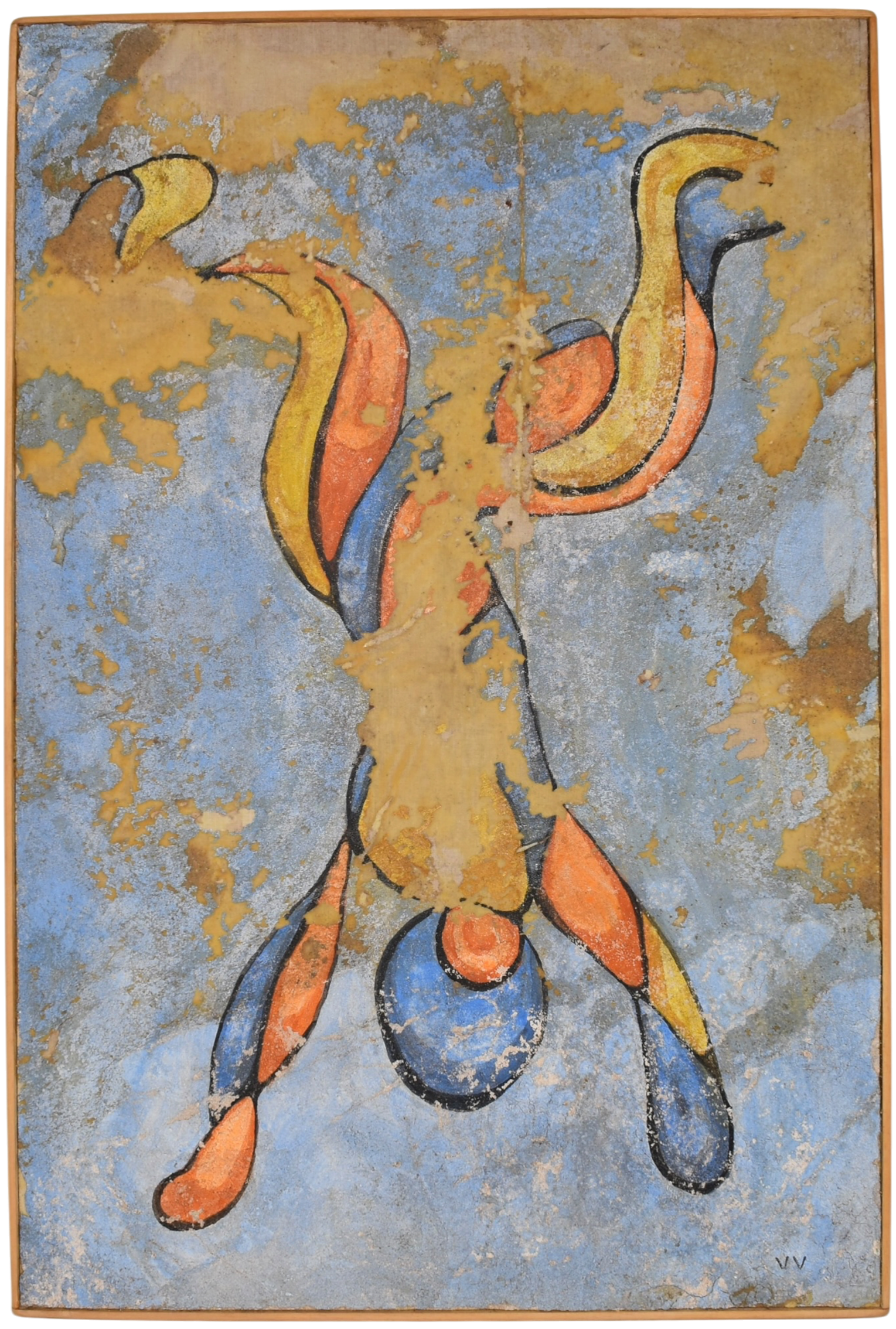
Foolish Splendor
30” x 20”
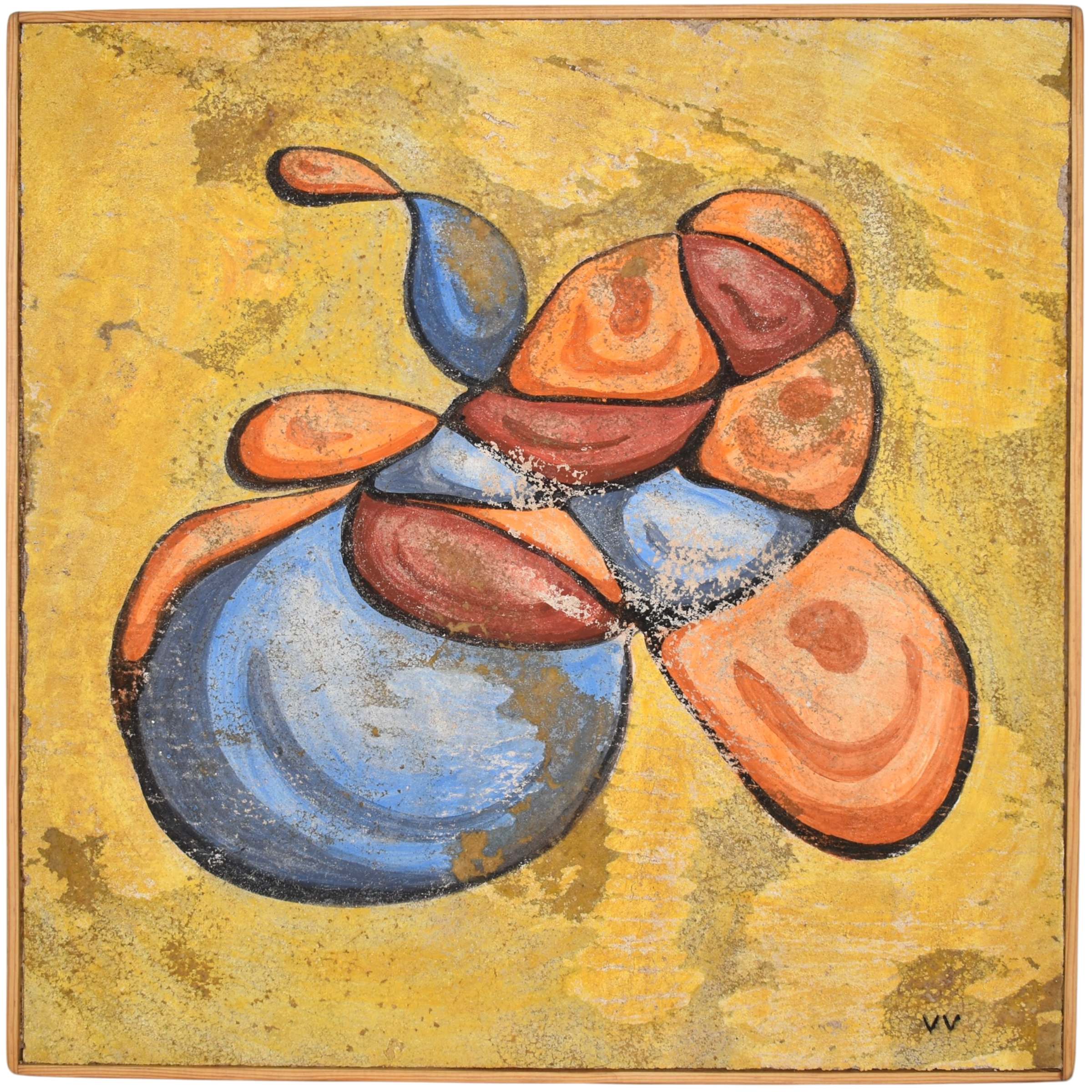
Breath In
20” x 20”
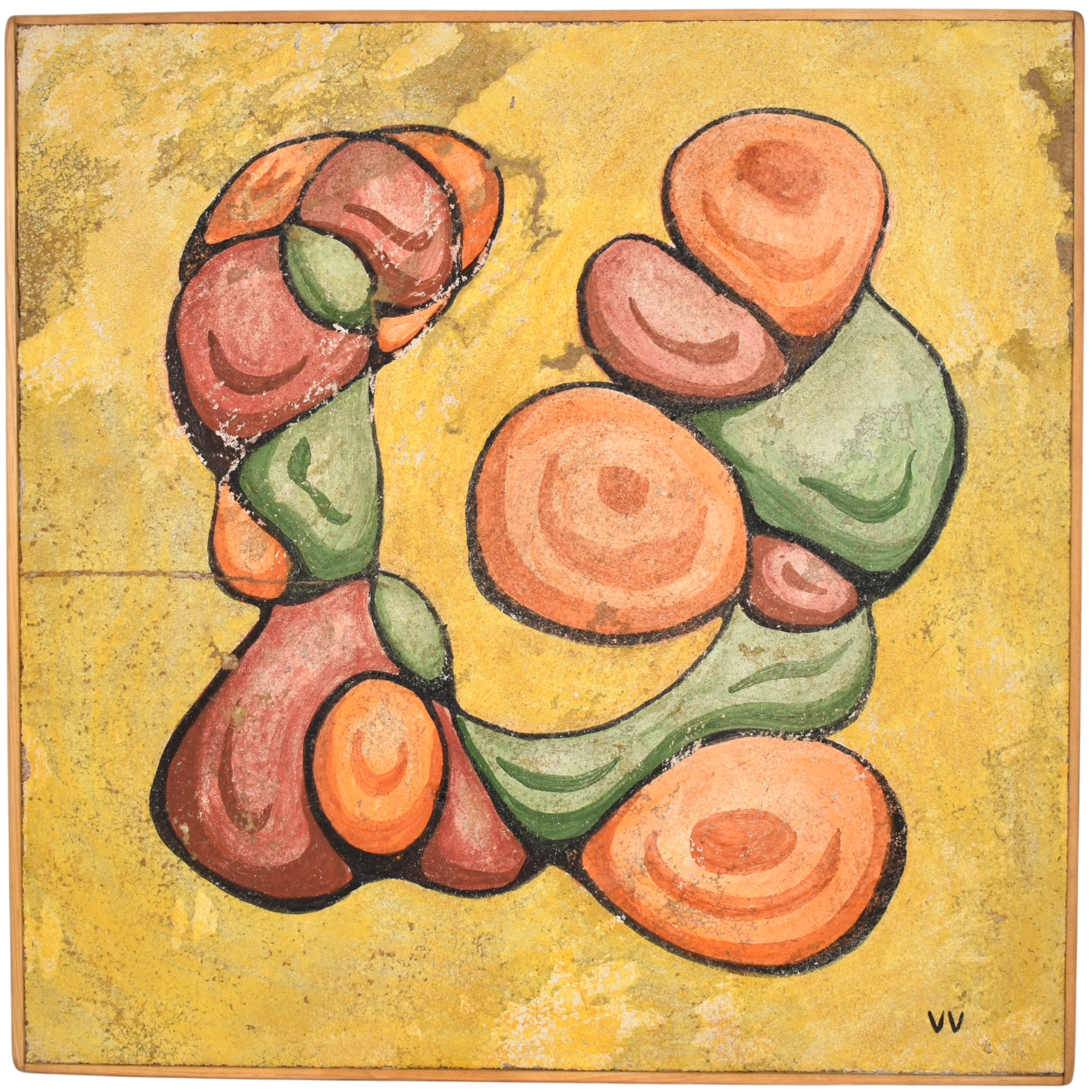
Breath Out
20” x 20”
Light Daydream: Fly Fishin or Fish Flyin?
Buon Fresco with Strappo Transfer
Winter 2025
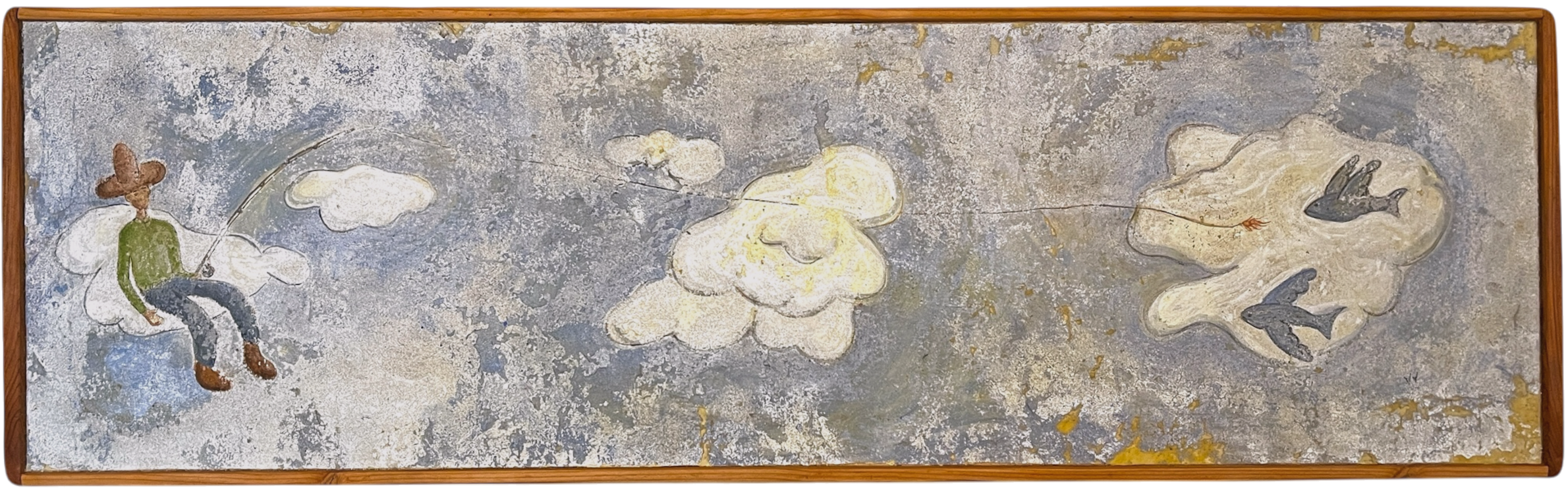
12” x 40”
Self Portrait
Buon Fresco with Strappo Transfer
Summer 2024
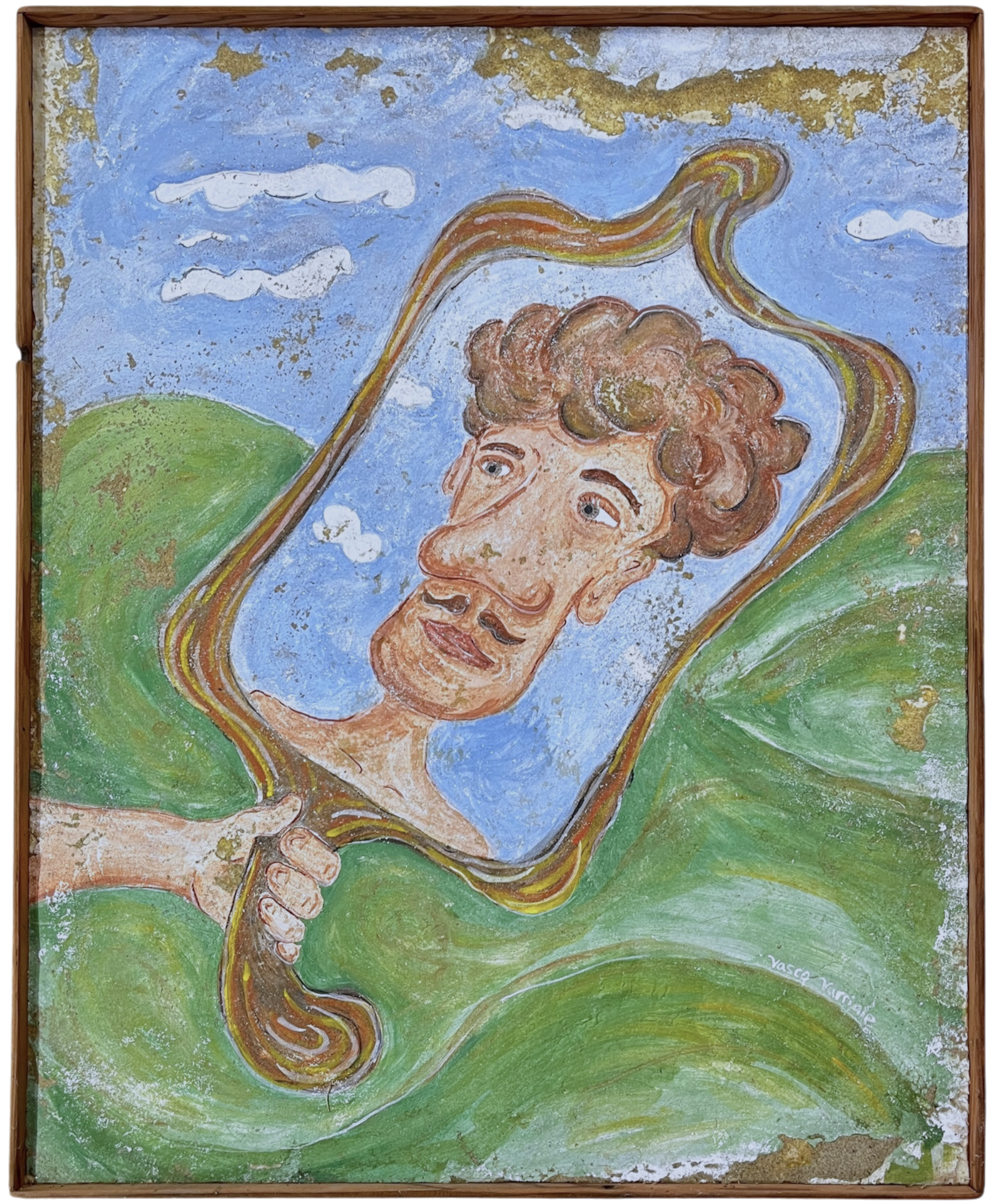
42” x 32”
“Dancing Is the Only Thing That Matters”
Buon Fresco with Strappo Transfer
Miniature Series, Summer 2024
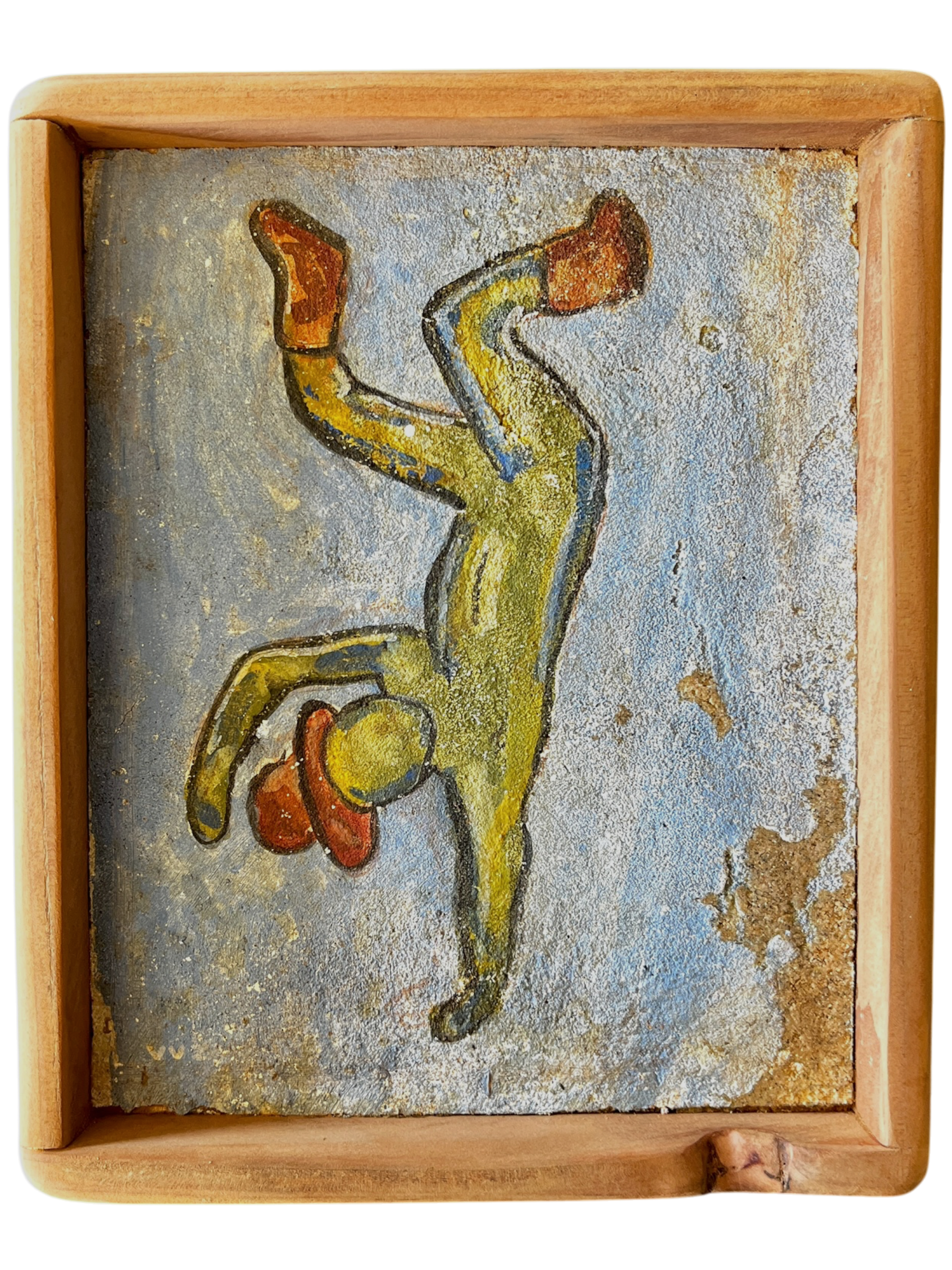
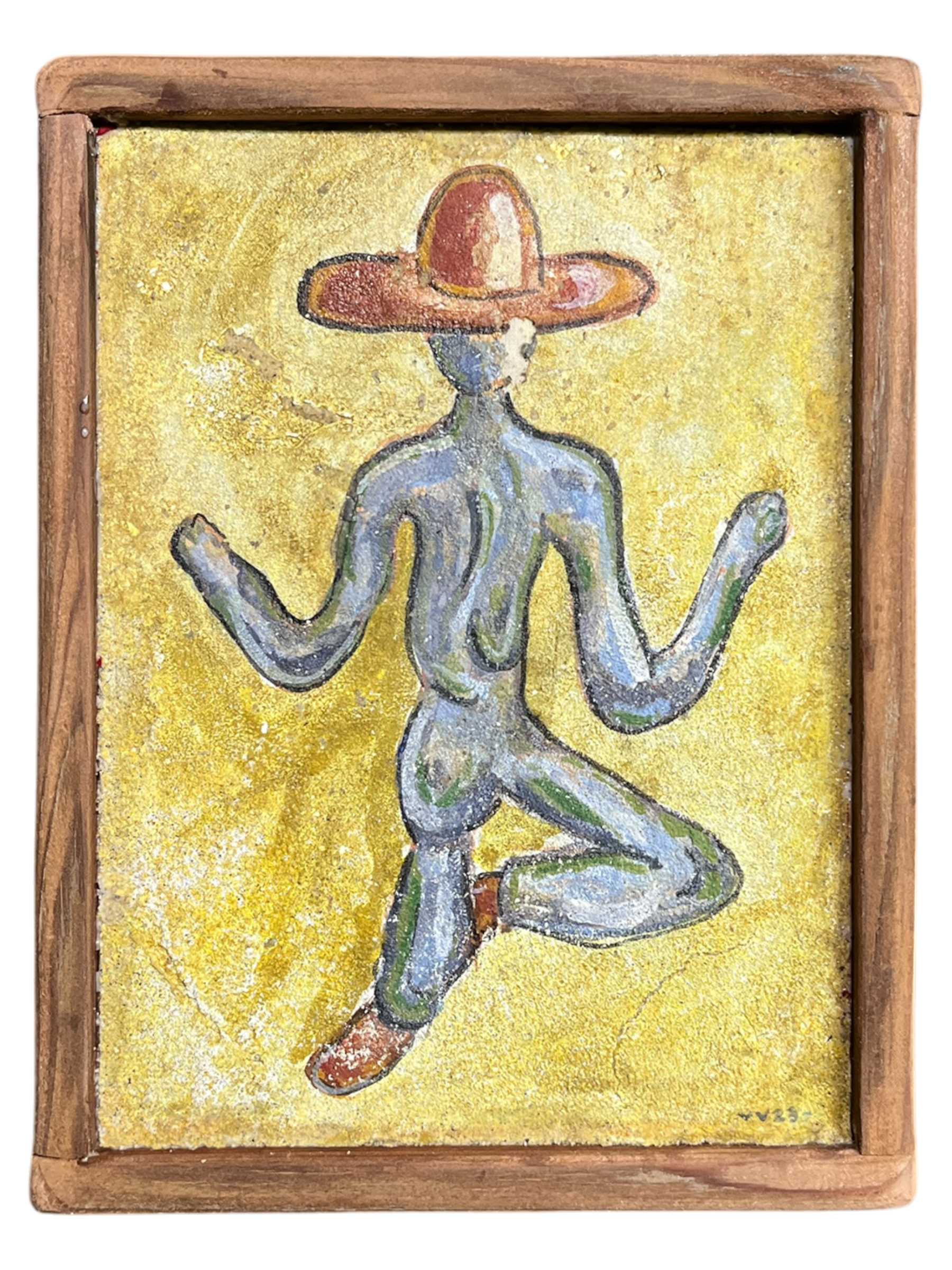
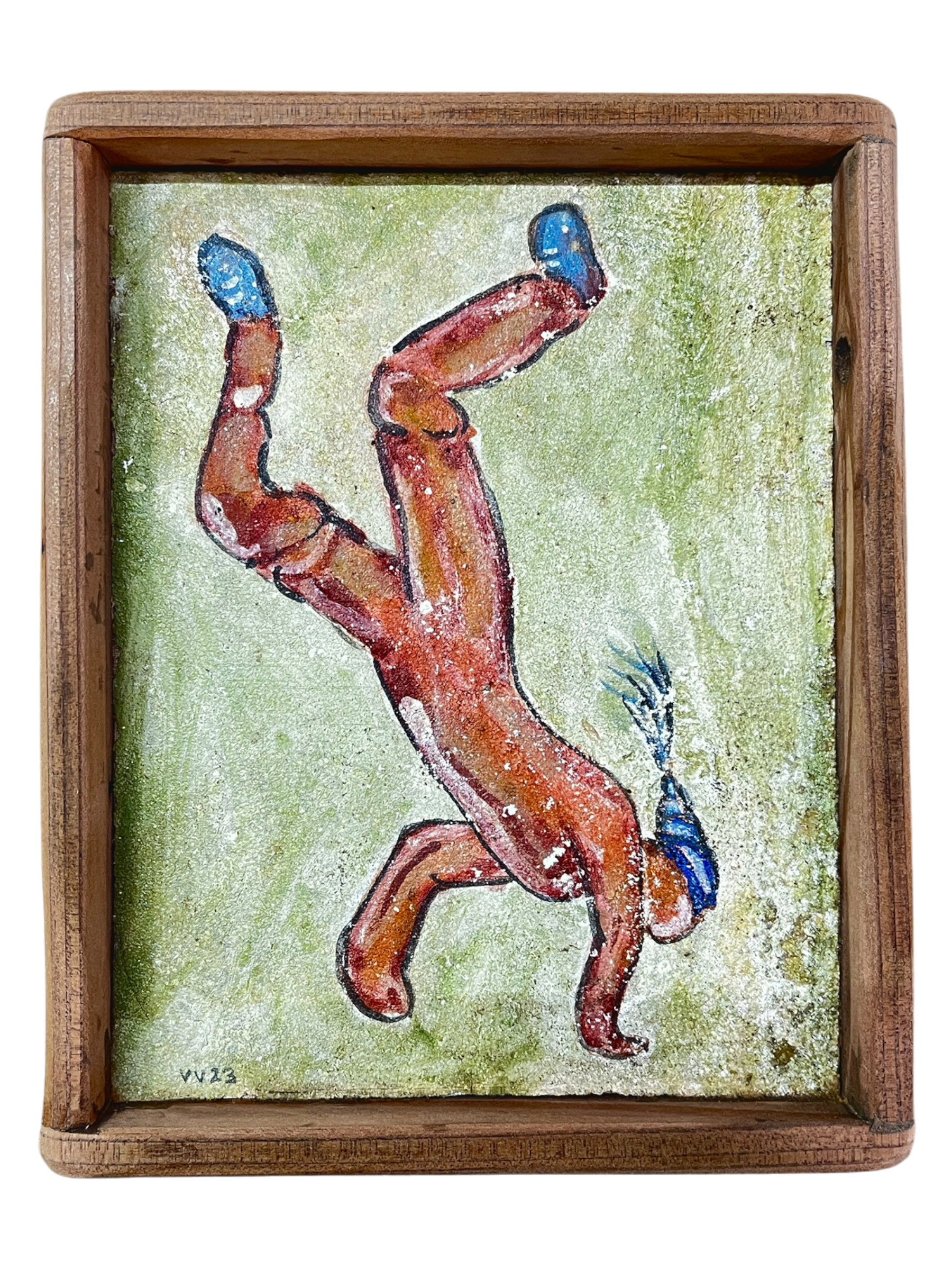
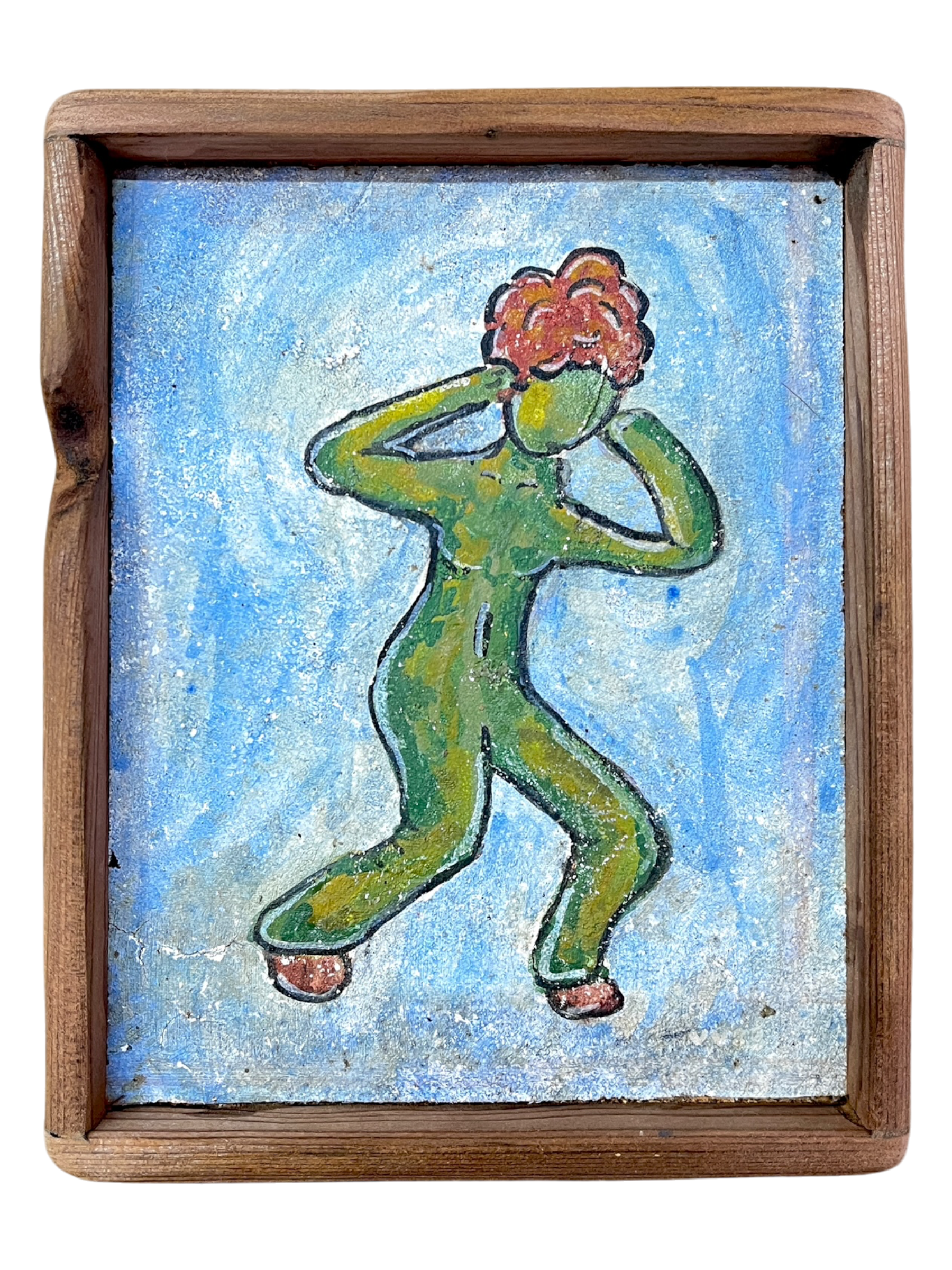
8” x 6”
In the Garden
Buon Fresco with Strappo Transfer and Silver Leaf
Collection of Early Works, 2017-2019
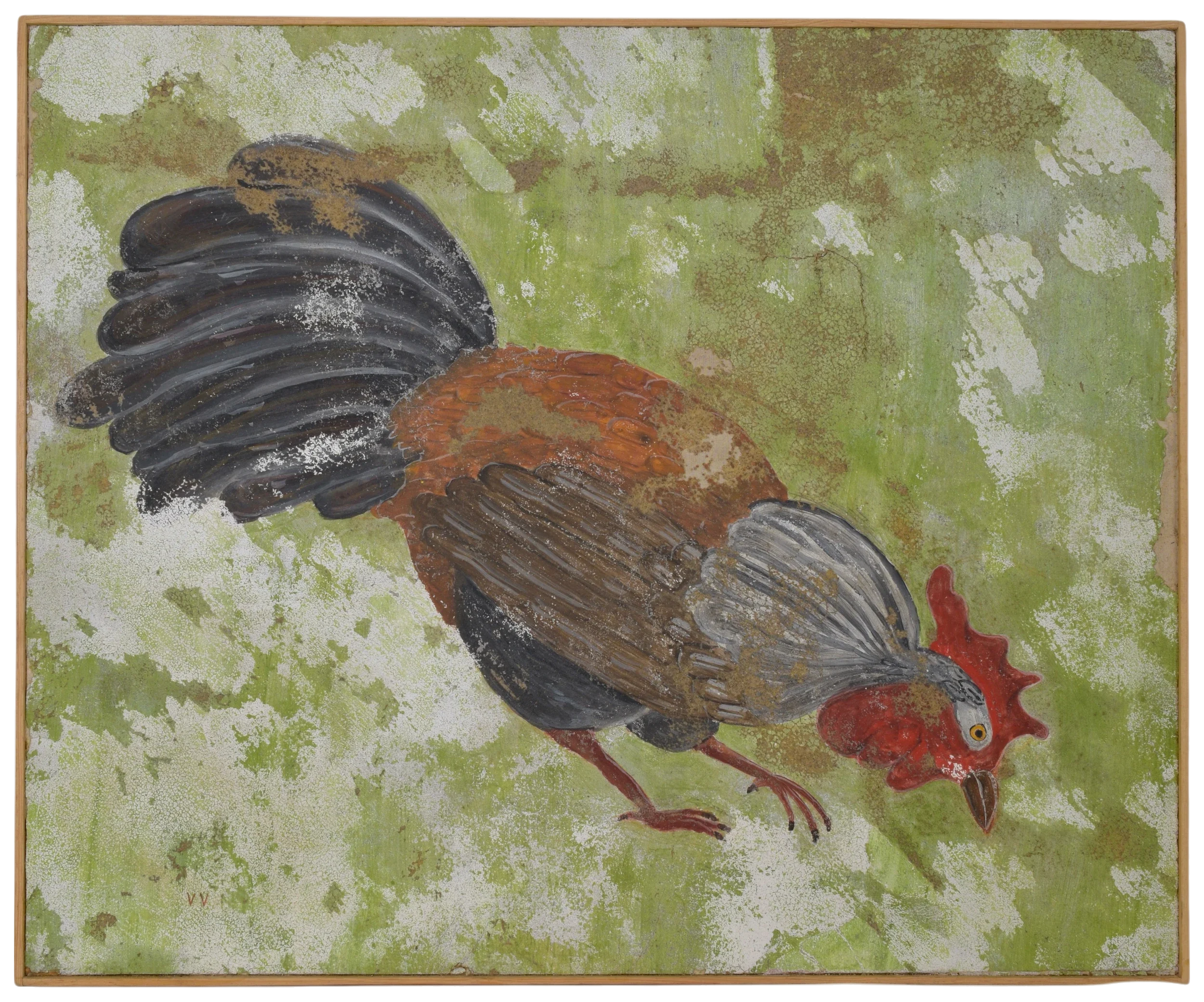
Rooster at Work
26” x 32”
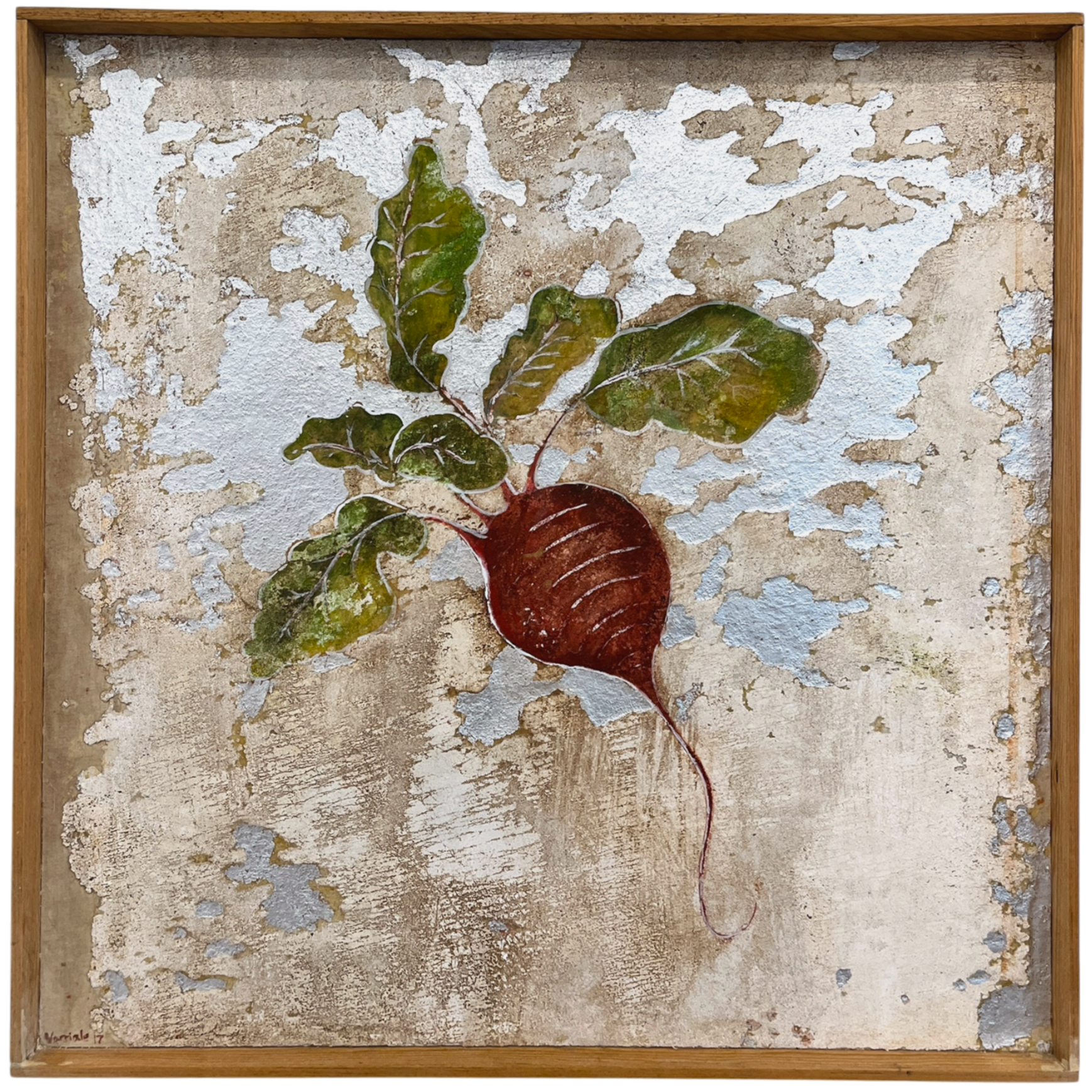
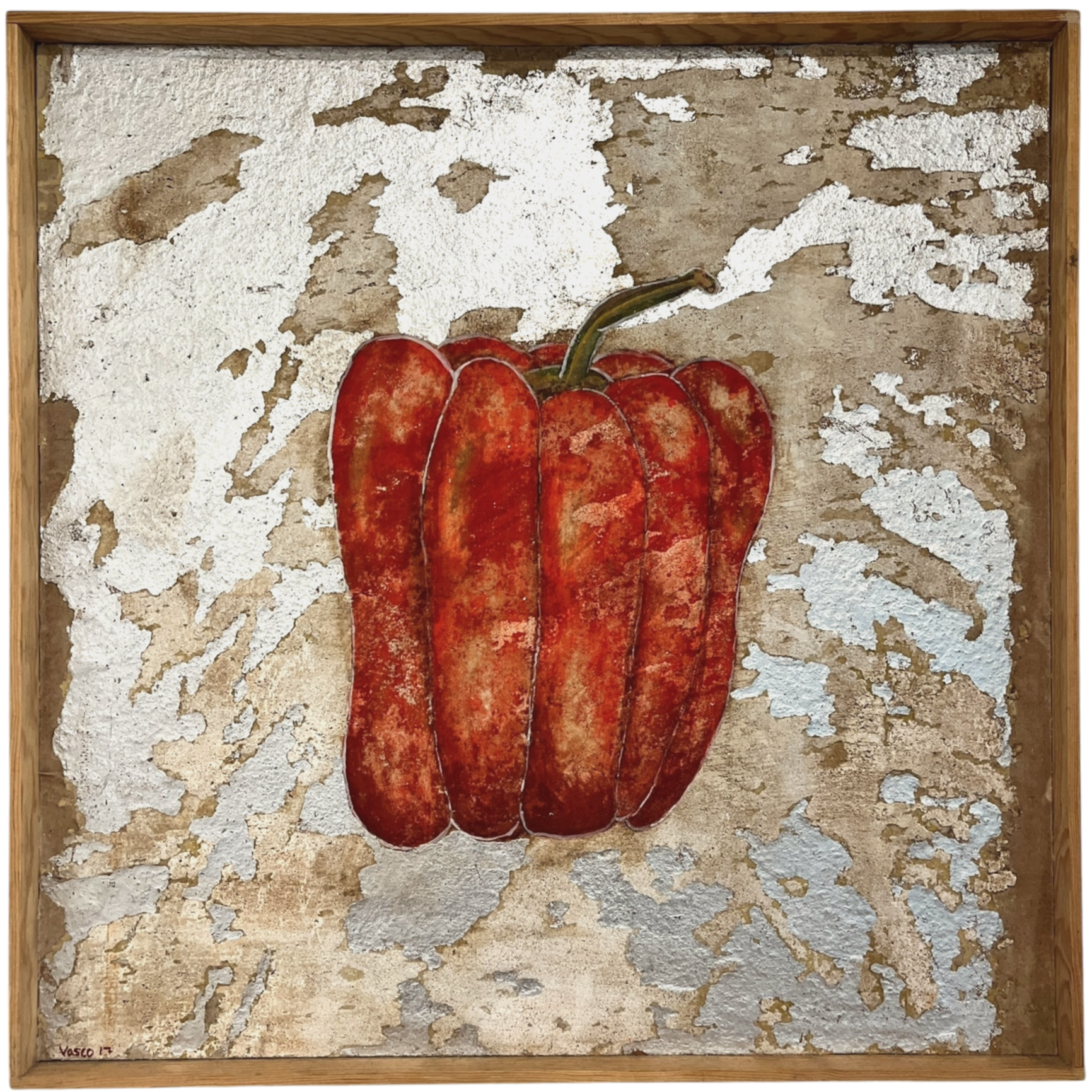
Bell Pepper
15” x 15”
Beet
15” x 15”